Metal Casting strategies which optimize overall performance in manufacturing
Recognizing the Metallurgy Behind High-Quality Aluminum Factory Alloys
The Essentials of Aluminum Alloys
Although aluminum is widely identified for its lightweight and corrosion-resistant residential properties, understanding the fundamentals of light weight aluminum alloys is essential for appreciating their diverse applications. Light weight aluminum alloys are categorized primarily into 2 groups: wrought and cast alloys. Wrought alloys are formed by procedures such as squeezing out or rolling, while cast alloys are created by putting molten aluminum right into molds.
Each category is additional classified by a four-digit mathematical system, showing the main alloying aspects. The 1000 series shows pure aluminum, while the 2000 series consists of copper as the main alloying aspect. The addition of other steels improves resistance, stamina, and workability to deterioration, enabling tailored residential or commercial properties fit to particular applications. Understanding these classifications and their ramifications is essential for markets varying from aerospace to automobile, where material performance and integrity are vital.
Key Characteristics of Shop Alloys
Shop alloys, a part of aluminum alloys, are specifically designed for casting applications, and they possess unique qualities that set them apart from wrought alloys. These alloys show excellent fluidity, enabling them to fill elaborate mold layouts and ensure uniformity in the end product. Additionally, shop alloys often have a lower melting factor, facilitating much easier spreading processes and decreasing power intake during production.
An additional essential quality is their enhanced resistance to corrosion, which is critical for parts revealed to extreme settings. Factory alloys also demonstrate excellent mechanical homes, consisting of toughness and ductility, which are crucial for durability in various applications. Their versatility to various casting strategies, such as sand spreading or die casting, additional underscores their versatility. On the whole, the buildings of factory alloys make them suitable for a large range of industries, from vehicle to aerospace, contributing to the performance and durability of cast parts.
Make-up and Specifications of Aluminum Shop Alloys
The composition of light weight aluminum shop alloys is essential in identifying their performance and suitability for different applications. These alloys typically contain aluminum incorporated with aspects such as silicon, copper, magnesium, manganese, and zinc, each contributing specific properties. For example, silicon boosts fluidness and lowers shrinking, making it critical for casting procedures. Copper boosts stamina and hardness yet can decrease corrosion resistance.
Specifications for aluminum foundry alloys, established by companies such as the Aluminum Organization, warranty uniformity and quality throughout various applications. Typical alloy designations, such as 319.0 and 356.0, indicate certain essential structures and mechanical residential or commercial properties. Conformity with these standards helps suppliers produce reputable elements, whether for vehicle, aerospace, or commercial uses. Comprehending these compositions and adhering to recognized requirements are important for optimizing the mechanical characteristics and overall honesty of light weight aluminum foundry items.
Warmth Treatment Processes for Boosted Efficiency
Warmth therapy procedures play a critical role in enhancing the performance of light weight aluminum alloys by modifying their microstructure and mechanical properties. Foundry. These procedures commonly include solution warm annealing, aging, and therapy. Service warm treatment includes heating up the alloy to a certain temperature level, allowing alloying aspects to dissolve right into the light weight aluminum matrix, which can click to read boost toughness and ductility. Following this, maturing can be done, either naturally at area temperature level or unnaturally at raised temperatures, to speed up strengthening stages that boost solidity and tensile strength
Annealing, on the other hand, is employed to ease interior anxieties and boost workability, especially in alloys that have undertaken significant contortion. Each of these processes have to be carefully managed to attain the wanted balance of hardness, ductility, and toughness, inevitably causing top notch light weight aluminum foundry alloys that satisfy rigorous performance demands in numerous applications.
Applications of Aluminum Factory Alloys in Sector
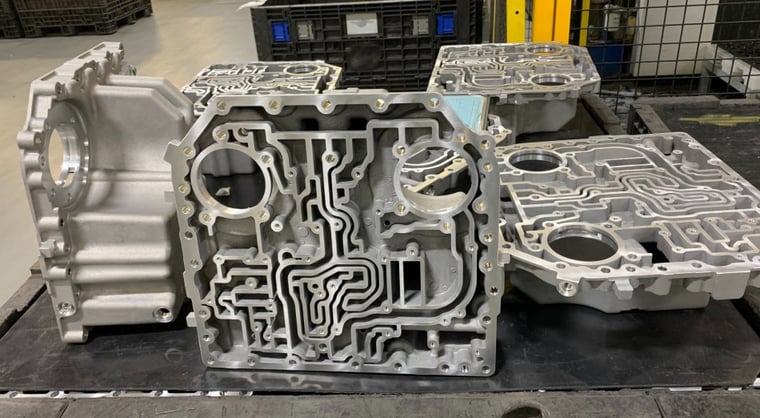
Aluminum factory alloys are commonly made use of throughout numerous industries due to their positive buildings, which come from reliable warmth treatment procedures that enhance their mechanical qualities. In the automotive sector, these alloys are employed to make engine components, wheels, and transmission real estates, taking advantage of their lightweight nature and superb strength-to-weight ratio. Aerospace applications also capitalize on light weight aluminum shop alloys for airplane structures and elements, where weight reduction is important for performance and fuel efficiency.
Furthermore, the electric market relies on these alloys for housings and adapters, as they display excellent electric conductivity and rust sites resistance. In building, light weight aluminum shop alloys are vital for facades, home window frames, and structural elements, integrating visual allure with durability. The versatility of aluminum foundry alloys makes them a preferred selection in different applications, making sure high performance and integrity across different fields.
Regularly Asked Inquiries
How Does Recycling Affect Light Weight Aluminum Shop Alloy Quality?
Reusing aluminum can both improve and endanger factory alloy high quality. While it minimizes raw product costs and environmental influence, impurities from recycled sources might negatively affect mechanical residential or commercial properties, necessitating cautious processing to maintain desired requirements.
What Are the Environmental Impacts of Aluminum Shop Processes?
Light weight aluminum foundry procedures contribute to environmental influences such as greenhouse gas exhausts, power intake, and waste generation. Furthermore, contaminants may influence air and water quality, highlighting the requirement for sustainable techniques within the industry.

Can Aluminum Shop Alloys Be Bonded Efficiently?
Aluminum factory alloys can be effectively bonded, although specific techniques and filler materials are needed to attain suitable results. Appropriate prep work and understanding of the alloy's residential properties contribute significantly to the top quality of the weld.
What Are the Common Issues in Light Weight Aluminum Spreading?
Common problems in light weight aluminum spreading include porosity, shrinking tooth cavities, incorporations, and surface roughness. These concerns can arise from incorrect mold design, insufficient melting practices, or contamination, impacting the total quality and efficiency of the end product.
Just How Do Impurities Influence Light Weight Aluminum Factory Alloy Efficiency?
Contaminations negatively impact aluminum factory alloy efficiency by modifying mechanical properties, lowering deterioration resistance, and compromising general quality. The visibility of elements like iron and silicon can result in problems, ultimately impacting the alloy's longevity and functionality.
Aluminum is extensively acknowledged for its light-weight and corrosion-resistant residential properties, understanding the fundamentals of light weight aluminum alloys is crucial for appreciating their diverse applications. Aluminum Casting. Light weight aluminum alloys are classified largely right into two groups: functioned and cast alloys. Foundry alloys, a part of light weight aluminum alloys, are particularly made for casting applications, and they possess distinctive features that establish them apart from functioned alloys. Criteria for aluminum shop alloys, developed by companies such as the Light weight aluminum Organization, guarantee uniformity and high quality throughout various applications. Pollutants negatively impact light weight aluminum foundry look at more info alloy performance by modifying mechanical homes, decreasing corrosion resistance, and endangering total top quality